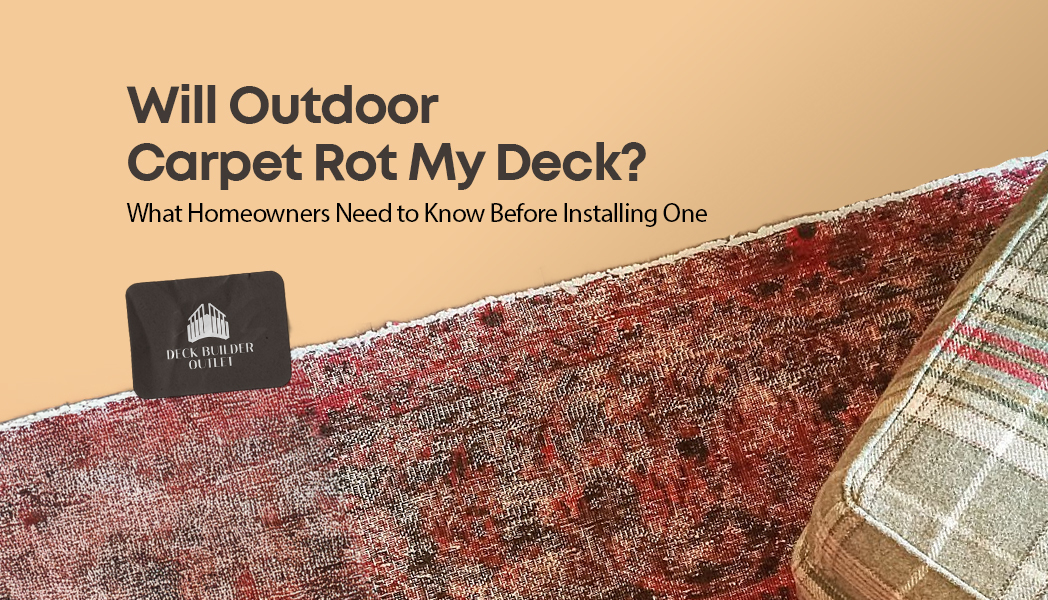





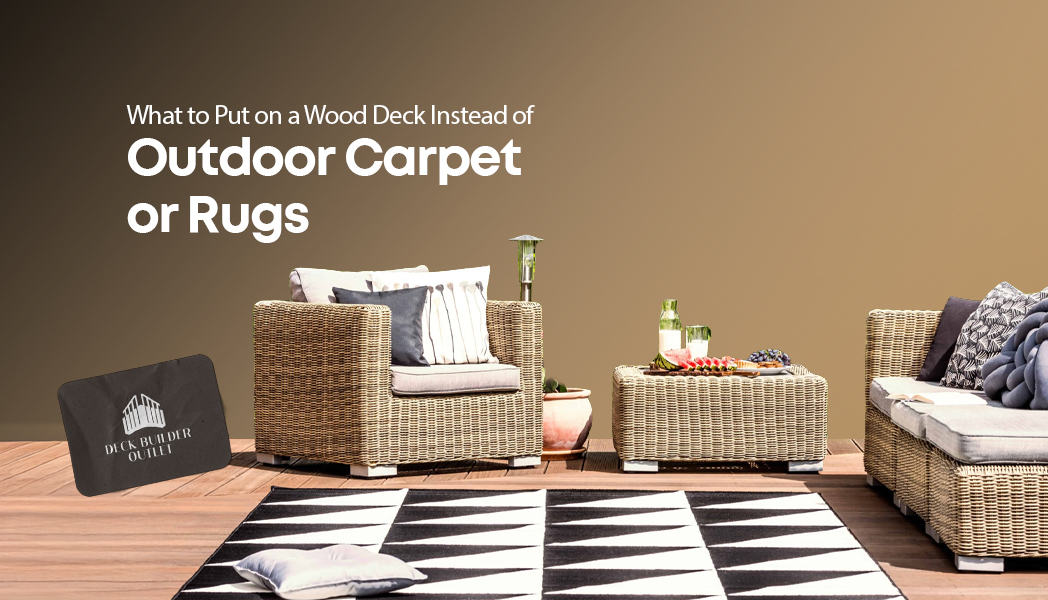
Outdoor rugs used to be that girl of deck decor, throw one down, and suddenly you’ve got vibes. But here’s the plot twist: if you’ve got a wood deck, outdoor carpet or rugs can quietly wreck the very thing you were trying to elevate.
Moisture gets trapped, airflow gets blocked, and before you know it, mold, mildew, and wood rot roll in like uninvited guests. Now that we’ve all had our rug‑burning moment, the real question is:
What should you put on a wood deck instead of outdoor carpet or rugs?
Let’s get into it.
If you’re short on time (we feel you), here’s the TL; DR. The best wood deck alternatives to outdoor rugs:
These choices ensure airflow, drainage, and durability, unlike rugs that silently sabotage your deck over time.
Outdoor rugs look cute until they’re wet. Here’s why:
Wood needs air like plants need sunshine. Rugs sit right on top of the surface and trap moisture, especially after rain or dew. According to the Forest Products Laboratory (U.S. Department of Agriculture), prolonged moisture exposure is the primary cause of wood decay in outdoor structures. Even pressure‑treated lumber isn’t immune when airflow is blocked.
Dark, damp, no airflow? That’s like a VIP party for fungus. The CDC reports that mold spores can begin to grow within 24–48 hours under humid conditions. And once mold takes hold, it’s not just unsightly. It can cause health concerns and damage surfaces.
Sunlight hitting uncovered wood causes fading, while shaded spots under rugs stay darker. The result is that the checkerboard looks like no one wanted, but everyone sees it.
Rot doesn’t just look bad. It weakens the deck’s structure and can lead to boards needing replacement, tightening screws blowing out, and rails becoming unsafe.
Moral of the story: Rugs may feel soft under your feet, but long-term, they play you harder than they care to admit.
Now for the glow‑up. These options check all the boxes for style, safety, airflow, and longevity.
If deck solutions had a hall of fame, interlocking deck tiles would be inducted. And why they work:
And according to some decking retailers, interlocking tiles are a top pick for covering old or uneven decks without trapping moisture because the deck can breathe naturally. They are best for:
It also comes with its pros and cons, like excellent airflow, customer pattern layouts, and easy installation. Along with this, it has some cons as well, like moderate cost and some materials that require seasonal removal.
Maintenance: Low
Lifespan: 10–25 years (material dependent)
Not all rubber mats are created equal. The MVPs are perforated or raised rubber deck mats engineered specifically for outdoor decking. And the reason why people love them:
Pro tip: If it doesn’t say “drainage‑safe” or “ventilated,” keep scrolling. Closed rubber mats can trap moisture just like rugs. They are finest for:
Maintenance: Low
Climate fit: Wet & humid regions
If you’re thinking long‑term and want patio energy that slaps every season, floating deck systems are where it’s at. They are actually worth it, why, because of:
Composite materials are engineered to resist moisture absorption, unlike natural fibers in rugs. And those who should never ever skip them are:
Sometimes the best alternative is… nothing on top at all. That’s why modern deck coatings now deliver:
Because the customers are looking for:
Low‑VOC formulas are now standard, meaning you get durability without toxic off‑gassing, which aligns with eco‑friendly building standards. And the reason they are best is because of:
Maintenance: Recoat every few years
Here’s a 2026 deck trend you’ll want to steal: fewer floor coverings, more intentional layout. Instead of piling on rugs, use deck-safe furniture pads, outdoor planters, and sectional seating to define zones.
Not only does this create cozy, Instagram-worthy spaces, but it also eliminates moisture-trapping issues. The result? Less mess, smarter design, and a deck that looks good and stays healthy for years.
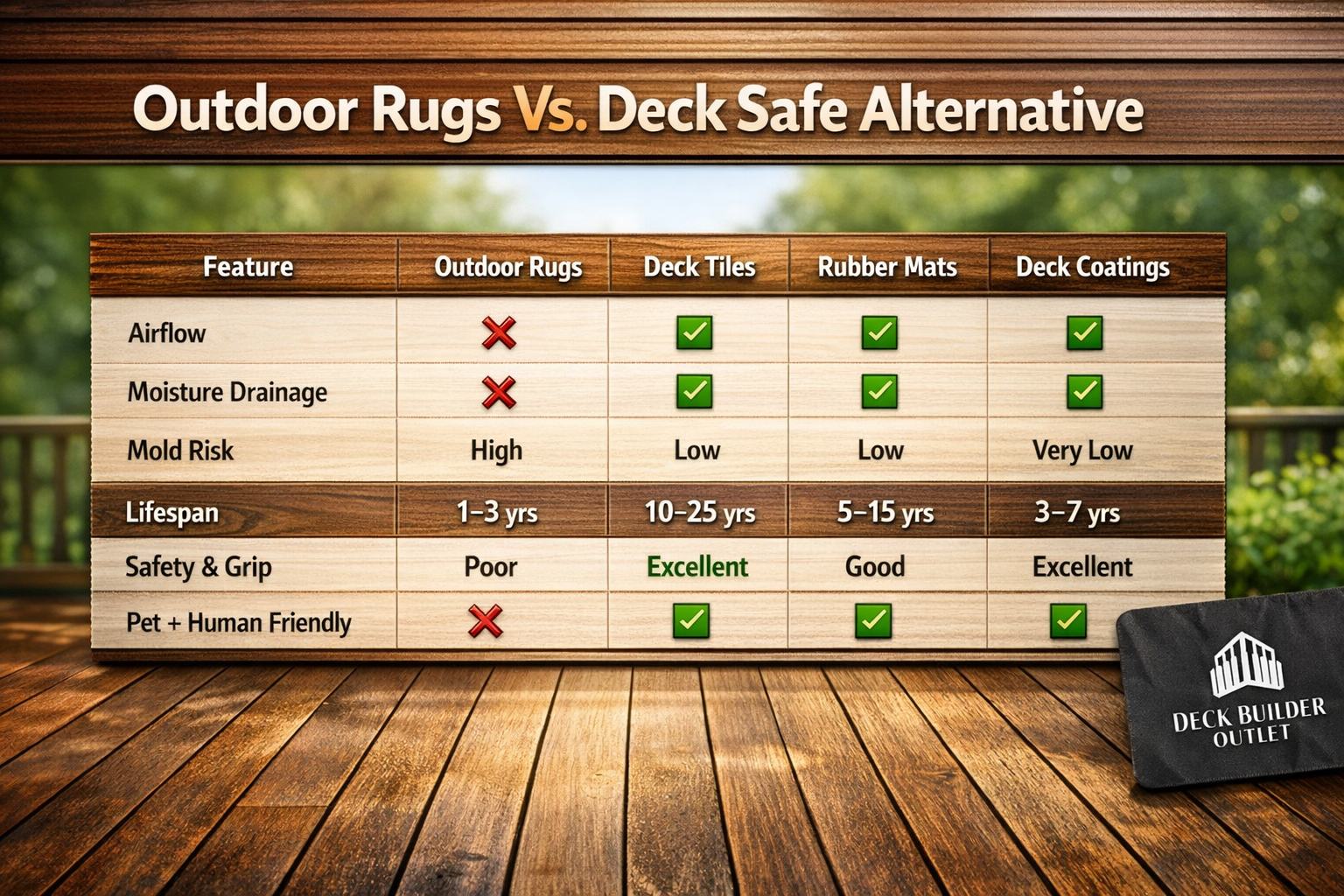
Your deck’s success depends on matching materials to your local climate. Wrong choices can lead to moisture damage, cracking, fading, or expensive repairs. Here’s a breakdown by climate type so your deck stays safe, stylish, and long-lasting.
Moisture is the silent enemy. Fabric or fiber rugs trap water, encourage mold, mildew, and wood rot. Interlocking deck tiles and perforated rubber mats let water drain and air circulate, keeping your deck dry and safe.
So, investing in the moisture-resistant materials may cost more upfront, but saves on frequent repairs and replacement in the long run.
Freeze-thaw cycles can crack or warp unfit materials. Removable tiles or freeze-resistant composites handle temperature swings and protect your deck.
Lifting tiles during heavy snow prevents moisture buildup and extends the deck’s lifespan, essentially giving your deck a winter vacation.
UV rays and heat are the main threats. Dark rugs trap heat, making surfaces uncomfortable and damaging wood. Light-colored coatings and UV-stable composite tiles reflect heat, resist fading, and protect your deck over time.
This means you should spend on sun-safe materials that reduce long-term discoloration, warping, and maintenance costs.
Environmental stewardship isn’t just good karma, it’s good building practice. And eco‑friendly decks are more than a vibe, and they’re a ranking signal too.
🔹 70% of outdoor wood deck failures are due to moisture issues (Forest Products Laboratory)
🔹 Mould can begin growing in as little as 24–48 hours in damp conditions (CDC)
🔹 Proper airflow and drainage reduce rot risk significantly (Deck manufacturer research)
These aren’t just numbers; they’re reasons your deck lasts longer with the right materials.
Outdoor rugs had their moment. In 2026, deck‑safe alternatives are smarter, safer, and built to last. Don’t let aesthetics sabotage your structure. Choose airflow, choose longevity, and let your deck live its best life. And if you want a no‑nonsense answer:
Yes. They trap moisture, leading to mould, mildew, discolouration, and eventually wood rot.
Absolutely. As long as they allow airflow and drainage, they promote longevity.
Yes, if they’re ventilated/perforated. Solid rubber mats can trap moisture.
Deck paint or stain is usually the most budget‑friendly option.
Give your deck a future‑proof upgrade that protects wood and elevates comfort because your deck deserves better than a rug. Let’s build it right.
Use interlocking deck tiles, perforated rubber mats, composite coverings, or textured deck paint instead of outdoor rugs as they allow airflow, drainage, and long-term deck protection. These options prevent moisture buildup, mold, and wood rot while keeping your deck stylish and durable.