


If 2020 made us appreciate our homes…
2026 is making us redesign them.
And nowhere is that shift more obvious than in outdoor living spaces.
According to the 2024 U.S. Houzz Outdoor Trends Study, over 60% of homeowners upgraded outdoor areas to expand usable living space. And that number continues climbing as exterior square footage becomes as valuable as interior remodels.
Meanwhile, Remodeling Magazine’s Cost vs. Value Report consistently ranks deck additions among the top exterior projects for ROI, often recovering 65–80% of their cost at resale.
Translation?
Decks aren’t optional anymore. They’re strategic investments.
1. Decks Are Now Lifestyle Extensions
The biggest shift in outdoor living trends 2026? Decks are being designed as intentional living zones. Instead of “add a deck,” homeowners are asking:
- How will we entertain here?
- How does this flow from the kitchen?
- Can this feel like a resort?
- Can we use it year-round?
The North American Deck & Railing Association (NADRA) reports increasing demand for multi-functional deck builds, especially those incorporating lighting, shade, and built-in features.
Expect:
- Multi-level decks
- Zoned layouts
- Seamless indoor-outdoor transitions
- Sliding glass walls open directly to the decking
In many remodels, decks now connect directly to upgraded enclosed spaces like porch conversions, blending indoor comfort with outdoor openness.
2. Composite & PVC Dominate Modern Deck Materials
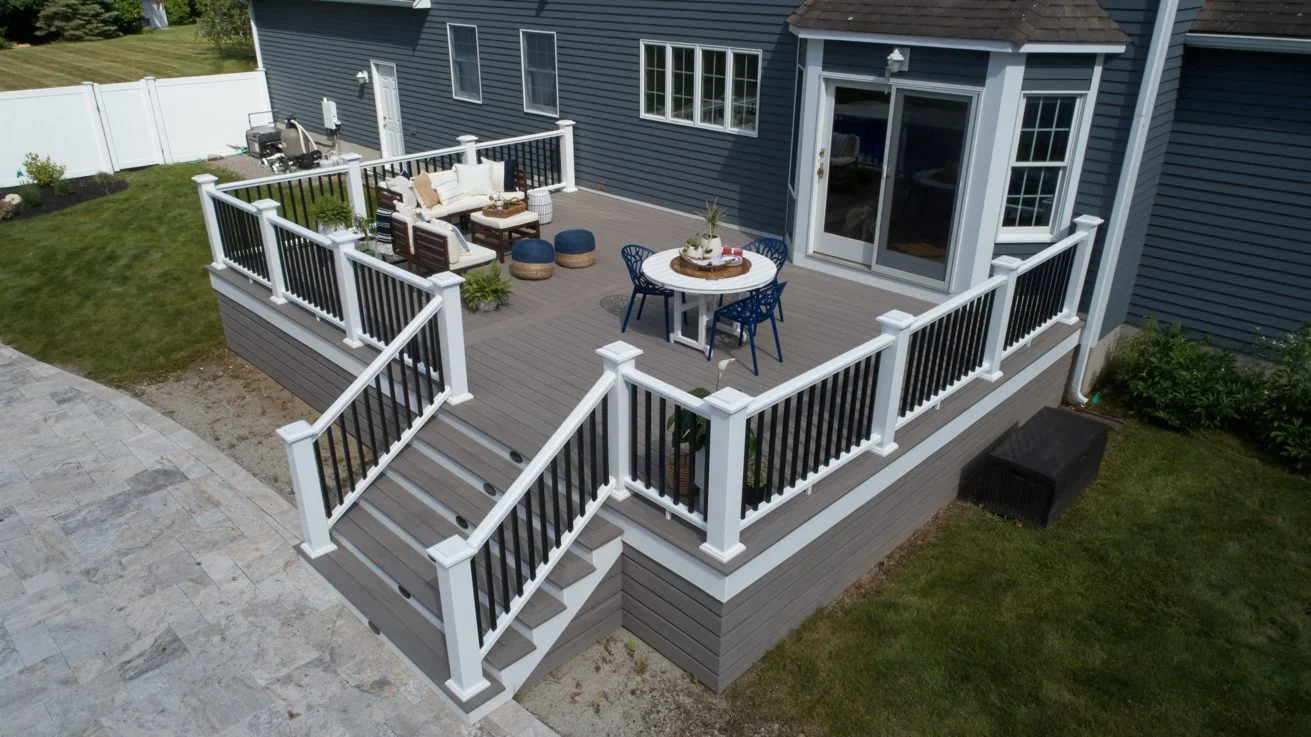
Traditional wood decking? Still around. But market data tells a different story.
Research shows composite decking continues gaining market share over pressure-treated lumber due to longevity and reduced maintenance costs. Industry projections suggest composite and PVC decking will dominate new builds through 2026 and beyond.
Here’s why:
- Durability
Composite decking resists cracking, splintering, and insect damage far better than traditional wood. Many products carry 25–50-year limited warranties, signaling long-term structural confidence.
- Weather Resistance
PVC decking performs exceptionally well in high-moisture or freeze-thaw climates. It resists rot, mold, and water absorption, reducing structural degradation over time.
- Low Maintenance
No staining. No sealing. No annual sanding cycles. Homeowners can maintain appearance with simple cleaning, saving thousands in long-term upkeep.
- Sustainability
Many composite decking products are manufactured using recycled plastics and reclaimed wood fibers. Longer product lifespans also reduce material waste compared to wood replacement cycles.
If you’re researching the best decking materials for modern decks, composite and PVC are dominating searches for a reason.
Low-maintenance materials aren’t a luxury anymore. They’re the baseline expectation.
3. Earth Tones & Neutral Color Families Take Over
Color trends are shifting hard toward biophilic design. Industry suppliers report increased demand for:
- Driftwood greys
- Warm browns
- Soft neutrals
- Matte finishes
Why?
Because homeowners want decks that complement landscaping, not overpower it.
Neutral tones also improve resale flexibility. Real estate data shows that neutral exterior upgrades attract a broader buyer pool than bold color statements.
Design aesthetics in 2026 = timeless over trendy.
4. Modern Deck Design Ideas 2026 = Clean Lines And Hidden Hardware
Minimalism continues dominating deck design trends. Here are some key notes to add to your bucket list:
- Hidden fastener systems
- Picture-frame borders
- Wide plank boards
- Flush stair treads
- Floating steps
But here’s what often gets overlooked:
Hardware matters.
Corrosion-resistant fasteners dramatically extend deck lifespan, especially in coastal or humid regions.
5. Deck Railing Systems Go Architectural
Search volume for upgraded deck railing systems continues rising.
2026 favorites:
- Glass panel railings
- Cable systems
- Black aluminum
- Mixed-material designs
Beyond aesthetics, safety compliance, and durability drive decisions. Aluminum and composite railings offer better corrosion resistance than traditional wood.
6. Outdoor Entertaining Spaces Are Permanent Fixtures
According to the American Institute of Architects Home Design Trends Survey, outdoor kitchens and covered outdoor spaces consistently rank among the top homeowner requests.
Trending inclusions:
- Built-in seating
- Outdoor kitchens
- Fire features
- Integrated deck lighting
- Pergolas & shade structures
Layered lighting is especially critical.
Post cap lights, stair lights, and under-rail LEDs improve both safety and ambience.
7. Smart Lighting & Subtle Tech Integration
Lighting is now integrated during planning, not added after installation.
App-controlled LED systems and solar lighting reduce energy use while improving nighttime functionality.
The result?
Higher usability + improved safety + modern appeal.
8. Sustainability Moves From Buzzword to Buying Decision
A 2024 Deloitte consumer study found that sustainability influences purchasing decisions across home improvement categories, especially among millennial and Gen Z homeowners.
Deck buyers increasingly look for:
- Recycled composite materials
- Long warranties
- Reduced chemical treatments
- Lower lifecycle impact
Sustainability now directly impacts brand trust and conversion rates.
What This Means for Homeowners in 2026
If you’re planning a deck project:
- Invest in low-maintenance materials.
- Design for long-term durability.
- Integrate lighting and shade from day one.
- Consider ROI and resale flexibility.
And if you’re mapping your next project, connecting with a knowledgeable supplier early makes the process smoother.
Frequently Asked Questions
Composite, PVC, and aluminium decking consistently perform best in snow and freeze-thaw conditions.
High-quality composite boards are designed to remain stable and resist cracking during temperature swings.
Yes, but only non-corrosive options like calcium or magnesium chloride.
Wood decks often last 10–15 years with maintenance, while composite and PVC can last 25–40 years.
PVC offers maximum moisture resistance, while composite provides an excellent balance of durability and cost.