




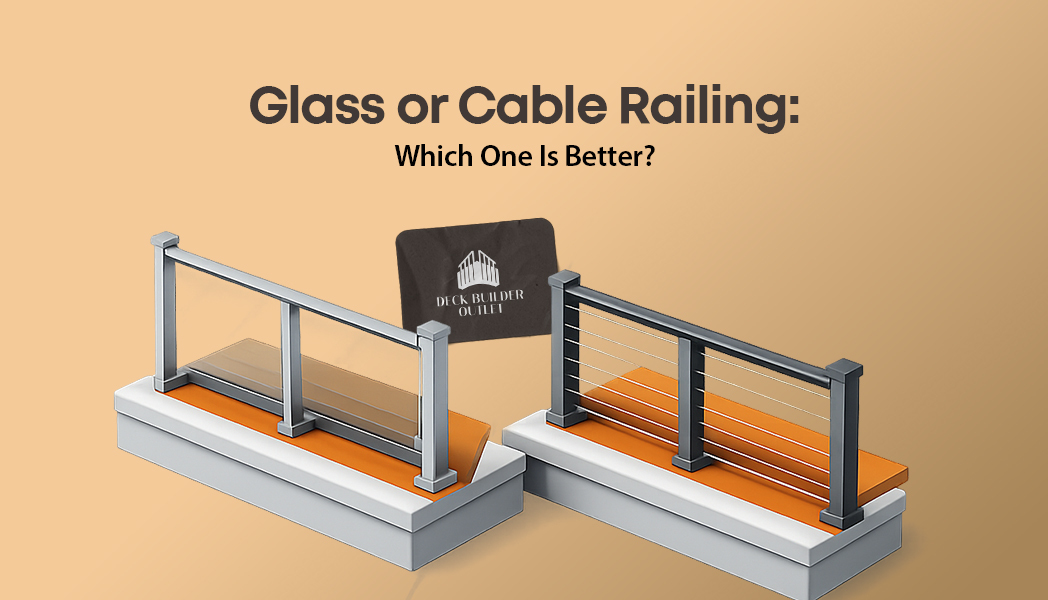
If you’re upgrading your deck in 2026, you’ve probably narrowed it down to two modern favorites:
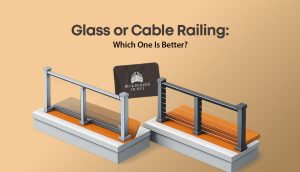
Glass railing or Cable railing
Both look clean. Both feel premium. Both boost curb appeal.
But they behave very differently in real life. Let’s get into it.
Including durability, maintenance, cost, climate performance, aesthetics, safety, and long-term value, there are so many things that you need to know.
Glass VS. Cable Railing: Why This Debate Is Bigger Than It Looks
According to industry reports from the North American Deck & Railing Association (NADRA), modern railing systems are one of the fastest-growing upgrade categories in residential deck builds.
Homeowners are moving away from traditional wood balusters and moving towards minimalist, view-preserving systems.
Why?
Because decks are no longer just platforms. They’re outdoor living spaces, and railing design directly impacts:
- Views
- Wind protection
- Maintenance effort
- Safety compliance
- Property value
- Overall design aesthetics
So this isn’t just a style decision.
It’s a functional one.
Quick Comparison Between Glass Railing And Cable Railing
If you want the fast answer first:
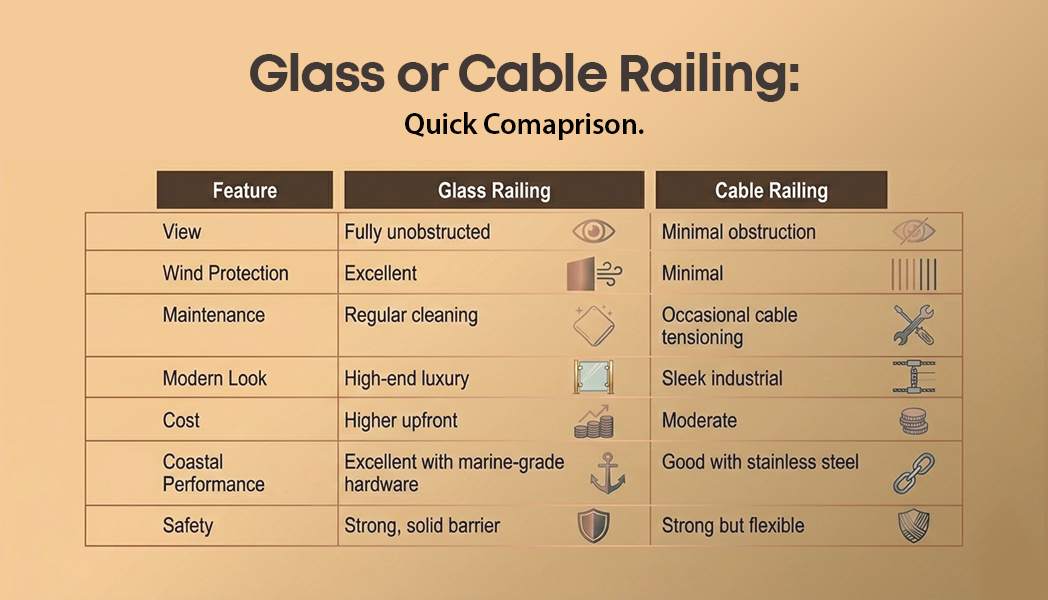
Now let’s break it down properly.
Glass Railing vs Cable Railing: Which Is Right for Your Deck?
Choosing between glass railing and cable railing isn’t just about looks. It affects your view, wind protection, maintenance, and long-term durability.
Let’s break it down clearly.
1. Aesthetics & Design Impact
Glass railing systems create a completely open visual field — no vertical balusters, no lines interrupting your view.
That’s why they’re especially popular for:
- Beach houses
- Lakefront homes
- Elevated decks
- Scenic properties
They also act as wind barriers, making them ideal for high-exposure environments.
Design vibe: Modern. Upscale. Architectural.
Cable railing systems use horizontal stainless steel cables tensioned between posts. They preserve sightlines, but you’ll still see thin horizontal lines.
They’re extremely popular in:
- Mountain homes
- Urban decks
- Contemporary builds
Design vibe: Minimalist. Contemporary. Slightly industrial.
2. View Preservation: Which One Wins?
If your top priority is a completely unobstructed view, glass railing wins.
There are zero visual interruptions.
However, cable railing still preserves roughly 90–95% of your sightline, which is more than enough for most homeowners.
The real question becomes: Do you want invisible — or architectural minimalism?
3. Wind Protection & Climate Performance
This is a major difference many homeowners overlook.
Glass panels act as wind barriers.
On raised decks or waterfront properties, this can dramatically increase comfort and usability. It can also help prevent furniture from shifting during strong winds.
Tempered glass panels are engineered to withstand:
- Impact
- Moisture
- Temperature changes
- Extreme weather
When properly installed, they perform exceptionally well in exposed environments.
Cable systems allow wind to pass through.
This can be beneficial in high-wind areas where pressure buildup matters, but it won’t provide the same wind protection as glass.
For coastal installations, marine-grade stainless steel (316) cables are essential to prevent corrosion.
4. Maintenance: What Are You Signing Up For?
Glass requires regular cleaning. Dust, pollen, salt spray, and fingerprints are more visible — especially in direct sunlight.
The good news?
Maintenance is simple:
- Glass cleaner
- Microfiber cloth
There are no tension adjustments and no moving parts.
Cable systems require occasional re-tensioning. Over time, cables may loosen slightly due to:
- Temperature fluctuations
- Structural settling
It doesn’t mean constant maintenance, but periodic checks are recommended. In coastal areas, stainless steel cables should be cleaned to prevent salt buildup.
5. Safety & Building Code Compliance
Both systems are code-compliant when installed properly.
Glass Railing
- Uses tempered safety glass
- Designed to resist breakage
- Meets height and load requirements
Cable Railing
- Must meet spacing requirements
- Often follows the “4-inch sphere rule”
- Requires proper tensioning and hardware selection
Installation quality and hardware choice are critical for both systems.
If you’re evaluating railing materials more broadly, comparing composite, aluminum, and vinyl frameworks can help you understand structural differences before selecting infill types.
6. Glass VS. Cable Railing: Cost Comparison
Glass railing typically costs more upfront due to:
- Tempered safety glass panels
- Specialized mounting systems
- Heavier material
- Installation complexity
Cable railing generally costs less initially, though high-end stainless systems can approach glass pricing.
Long-term costs may balance out depending on:
- Maintenance habits
- Hardware quality
- Environmental exposure
7. Durability & Longevity
Both systems are built to last when quality materials are used.
Glass
- Does not rust
- Does not corrode
- Resistant to UV damage
Cable
- Extremely strong
- Corrosion-resistant (with marine-grade stainless)
- Performs well in varied climates
Hardware selection plays a major role in long-term performance — especially in humid or coastal environments.
Which Is Better for Resale Value?
Luxury buyers tend to favour glass railing for upscale properties. It photographs beautifully and signals premium design or decking material.
Cable railing appeals strongly to modern-home buyers and contemporary builds.
The right answer depends on your home style:
- Coastal or high-end contemporary → Glass
- Mountain modern or industrial → Cable
- Budget-conscious modern → Cable
- High wind exposure → Glass
When Glass Is the Better Choice
Ok, so you want to choose glass, no problem. Choose glass railing if:
- You have a scenic view you don’t want interrupted
- You want wind protection
- You prefer ultra-modern aesthetics
- You’re designing a luxury outdoor space
- You don’t mind routine cleaning
10. When Cable Is the Better Choice
Wait, wait, wait, so now you want to switch to cable railing. Fine, choose cable railing if:
- You like modern industrial design
- You want a lower upfront cost
- You prefer a lighter visual structure
- You don’t mind occasional cable adjustments
- Your deck design already includes metal accents
Final Verdict: Which One Is Better?
There isn’t a universal “better.” There’s only one better for your lifestyle.
If you want uninterrupted views and wind protection, → Glass railing wins.
If you want modern minimalism at a slightly lower cost → Cable railing wins.
The real decision comes down to:
- Environment
- Design style
- Maintenance preference
- Budget
- Long-term goals
If you’re still unsure which system fits your project, you can always connect with a decking specialist and get yourself free from all the confusion.